A moment south of Homer City, Pennsylvania three towering smoke stacks and enormous, squat cooling towers perpetually billow massive clouds into the sky. At sunset the horizon on which the towers sit turns shocking shades of orange and pink, betraying the chemical contents of the endless emissions. This structure is the Homer City generating station, a coal-fired power plant owned by General Electric and operated by a subsidiary of Edison International.
The Homer City power plant is a familiar sight to residents of Indiana and surrounding counties. The primary stack, the third tallest in North America, is visible for miles on a clear day. Many of our neighbors, friends and families are or have been employed by the electric utility. This monolithic structure has generated electricity day in, day out for decades.
However, the environmental and public health impacts are inseparable from this iconic power plant. Mercury, a dangerous neurotoxin particularly harmful to women, children and developing fetuses is only one of many pollutants emitted by the plant. The Homer City power plant has faced several lawsuits for continued violations of the Clean Air Act (CAA) New Source Review and interstate air pollution rules. The Environmental Protection Agency (EPA), PA Department of Environmental Protection (DEP), and the states New York and New Jersey have charged the Homer City power plant for contributing to acid rain, smog, and health effects related to its toxic emissions. EME Homer City Generation LP (The Plant) is ranked as one of the worst polluting coal-fired power plants in the United States. The Plant continues to operate as it did decades ago, in spite of tougher environmental and public health regulations, and best available pollution control technology.
A recently released report by the Environmental Integrity Project ranked the Homer City power plant (EME Homer City Generation LP) the seventh dirtiest coal-fired power plant in the nation. The power plants were ranked according to their emissions as reported to the Environmental Protection Agency’s Toxic Release Index (TRI). The TRI tracks the release of toxic chemicals across a variety of industries, including the three coal-fired electric utilities in Indiana County.
The Environmental Integrity Project study uses TRI data to show that six of the top twenty dirtiest plants are in Pennsylvania; three are in Western Pennsylvania. The study ranked Pennsylvania first in arsenic, cobalt and lead emissions, and second in hydrochloric acid aerosols. Six of the top ten arsenic emitters are located in Pennsylvania.
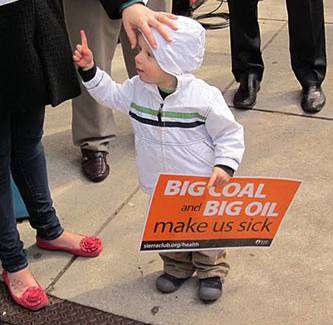
Mercury pollution is particularly dangerous to women, children and developing fetuses
The Homer City power plant (7th dirtiest!) reported 5,153 lbs of arsenic, chromium, lead and mercury emissions in 2010. The Plant ranked third in arsenic emissions with 2,400 lbs, and fourth in hydrochloric acid with a staggering 4,100,005 lbs. By their own admitted emissions EME Homer City Generation LP is one of the most serious polluters in the United States, dumping millions of pounds of deadly chemicals into our air and water each year.
The Environmental Protection Agency is set to issue air quality rules his week which will address mercury and air toxin releases from coal-fired power plants. These air quality rules will govern the release of hazerdous air pollutants, and are expected to save the nation billions in public health costs. Thousands of individuals and organizations from across the nation have come together to ask the EPA for protection from toxic pollution. Comprehensive air quality standards are necessary to protect Pennsylvania from the extreme levels of pollution from coal-fired power plants such as Homer City. Comprehensive regulation in conjunction with the efforts of individuals and organizations to move Beyond Coal are necessary to protect ourselves, our neighbors and our environment from continued contamination.
While the EPA air-quality rules are a significant step in mitigating the continuing damage to our health and communities, regulation cannot be the only strategy in our path to a world Beyond Coal. Fostering a green-energy economy as well as improving energy efficiency and smart-grid technologies, in conjunction with regulation, is necessary to overcome the health and environmental impacts of fossil-fuel energy production by moving Beyond Coal.

 furtherpgh
 peterroquemore
 VoidNewsNetwork

